Food Stories
Onion
17th November
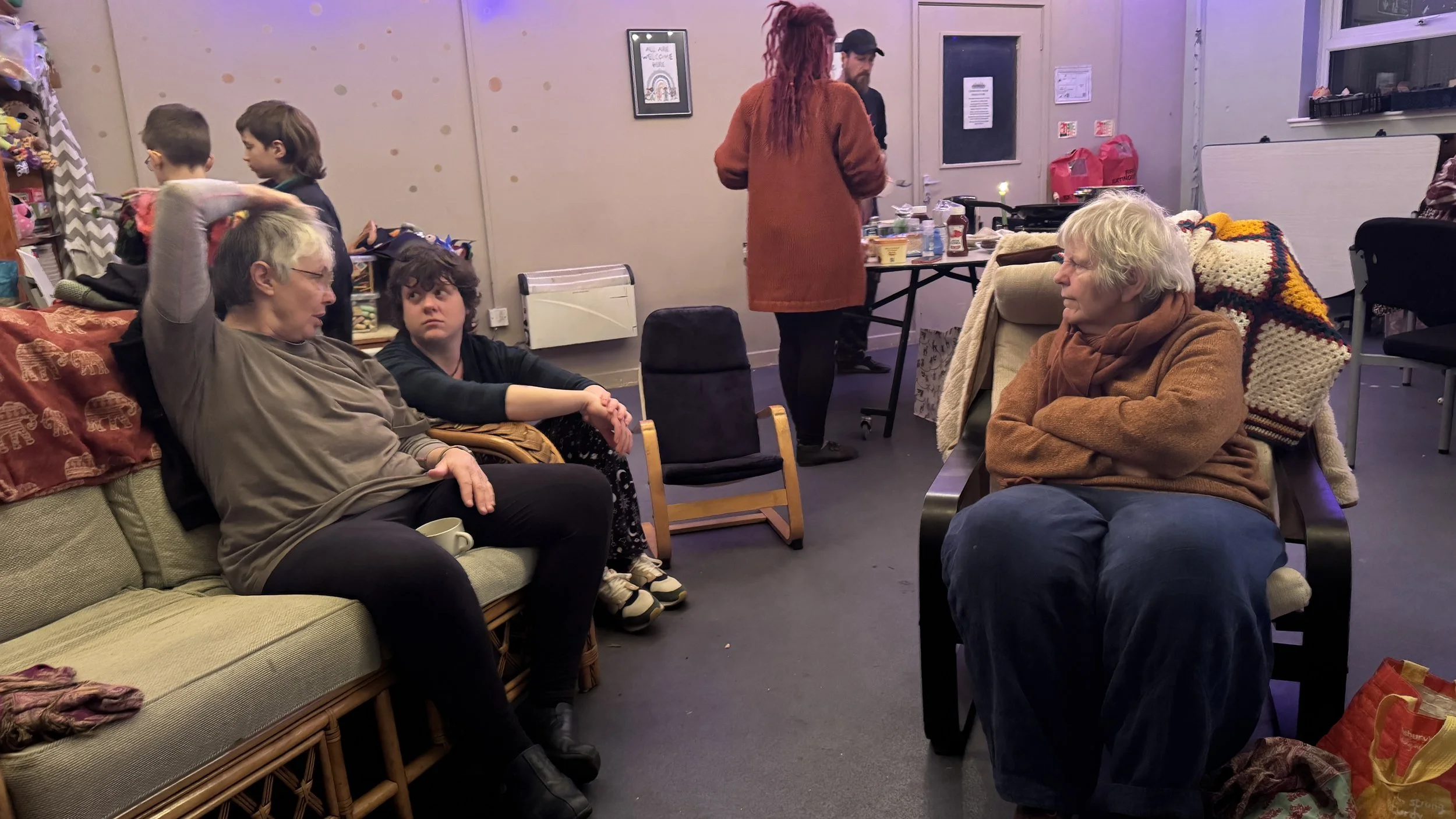
Cold enough to give you red cheeks. Twelve of us this time — two children, an elder, and everyone in between. We moved through the darker side of the year together, settling in with root ginger shots and breakfast tea.
The theme was onion.
Dyeing Tea Towels
We dyed tea towels with onion skins.
First you soak the fabric in water and soy milk for a day. Then you dry it. Then you soak it again. Then you dye it. Soak, dry, soak, dry.
"It needs to be a natural material."
The colours that come out of onion skins are the colours of the earth — warm, deep, amber. Someone looked at theirs lifting out of the pot and said oh, that looks lovely. We won't know the full result until they dry. Everyone was asked to bring them back the following week so we could see how they'd turned out.
The process of dyeing is slow and attentive. You have to stay with it. Stir, ladle, cut, design. It all goes in.
(add what Gaz shared here)
Broth
Salt, carrot, beetroot, squash, parsnip, turnip, onion. Root vegetables, what we had, what needed using.
It all goes in the pot. Stick it back in there.
On Nightshade, Wild Carrot, and Hemlock
A conversation about foraging and mistaken identity. Wild carrot looks very similar to parsnip — and to hemlock. Dead man's fingers. The top part looks like carrot. You tell them apart by the stem: hemlock has a spotty red stem. The leaves are notably different.
Suede; also Swedish person.
Collective Learning
Rhizomes belong underground — like orange lantern roots, propagating beneath the soil. We were looking them up and making them, learning as we went.
Thyme, bay, gum arabic. Melanin. Bereere. Bread, onion, ink.
Reflections
The nature of friendship within communities can interrupt a project or a directive for a session. External, curated gatherings can interfere with those dynamics — or actually, it's the other way round. It's in respect, fear, or reverence for relationships built inside communities.
Here, I am plugging into a community with the project ‘Nature of Community’. When all members of that community show, friendships made through the community I’ve plugged into take over the aims for the session, making it very difficult to be heard over other voices. It’s a tricky space to navigate with so many strong voices and relationships.
We lose depth when we as artists come in with an aim to a community in existence. How do you navigate friendship take-over.
I guess it's about deepening — how do we deepen our relationships and deepen it to place, to land? Getting people out of their comfort zones is complex. A disturbance to comfortable relationships and friendships. People get socially comfortable with the same faces, same activities, same social practices. Same old, same old. It's not the same old different people — it's the same story. It's the same, the same.
The objective then is to be gentle and clear about involvement. Is it extractive for me to come in, take stock, listen and collate creative responses — to notice relationships, topics of conversation, and follow those threads — those mentions as reflections and invitations — as wisdom from the simple needs of being social, together, breaking bread, eating together, updating each other. Just being social and in community.
'Stop being in community — relating — I've got boxes to tick!'